
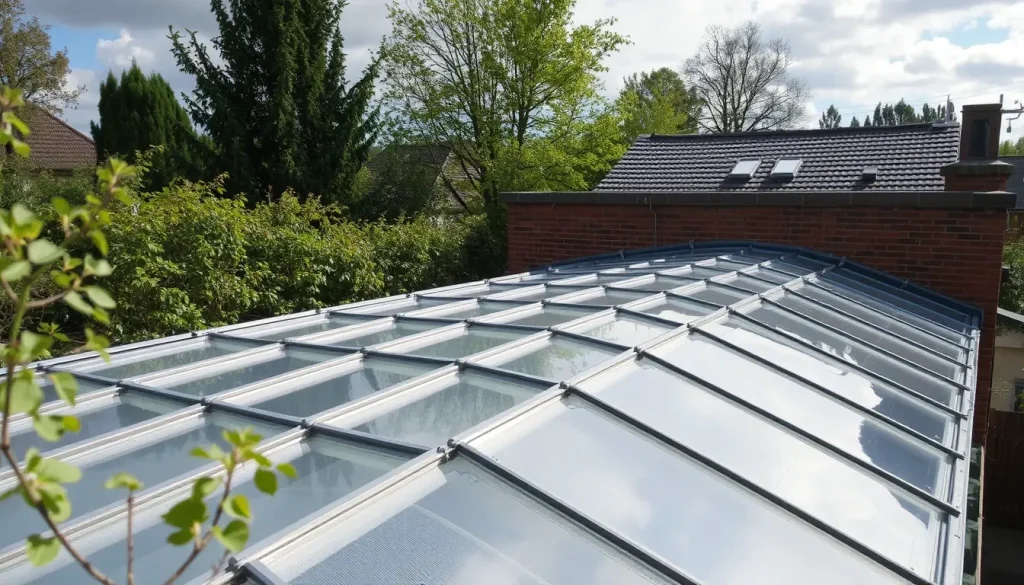
To install polycarbonate roofing, start by preparing the site, clear the area of debris, trees, and power lines, and guarantee its level to prevent water accumulation. Next, measure and cut the panels carefully, using proper techniques and safety measures.
Assemble the roof frame using compatible materials, leaving space for panel expansion and contraction. Install the polycarbonate panels, choosing the right type for your project and allowing space for thermal expansion.
Secure the roofing system with corrosion-resistant fasteners and weatherproofing techniques. By following these steps, you’ll be well on your way to a successful installation and there’s more to explore to guarantee a watertight seal.
Key Takeaways
- Clear the site of debris, trees, and power lines, and ensure its level to prevent water accumulation.
- Measure and cut panels carefully, using proper techniques and safety measures to avoid damage.
- Assemble the roof frame using compatible materials, leaving space for panel expansion and contraction.
- Install polycarbonate panels with compatible fasteners, allowing space for thermal expansion between panels.
- Secure the roofing system with corrosion-resistant fasteners, weatherproofing techniques, and a watertight seal.
Prepare the Roofing Site
Before you start installing polycarbonate roofing, make certain the site is ready. Clear the area of debris, trees, and power lines that could interfere with the installation process.
Assure the site is level and even, as uneven surfaces can cause water to accumulate and damage the roofing materials.
Consider the weather conditions before starting the installation. Avoid installing polycarbonate roofing during strong winds, heavy rainfall, or extreme temperatures. These weather conditions can make the installation process more challenging and may compromise the quality of the roofing materials.
Key Considerations:
- Check the site for any obstacles or hazards that could affect the installation process.
- Assure the site is level and even to prevent water accumulation.
- Plan the installation during favourable weather conditions.
- Inspect the roofing materials for any damage or defects before starting the installation.
Measure and Cut Panels
With the site prepared and the weather conditions favourable, you’re ready to start working with the polycarbonate roofing panels. It’s essential to handle these panels carefully, as scratches and cuts can lead to leakage or breakage.
Start by verifying your roof measurements against your original design plans to guarantee accurate fit. Polycarbonate roofing comes in different panel types, each requiring distinct handling procedures.
Here are common polycarbonate roofing panels:
| Panel Types | Handling and Cutting Instructions |
|---|---|
| Multi-wall | Score the panels before bending them along the seam; avoid kinking |
| Twin-wall | Mark with a soft marker for clarity and flexibility in adjustment; for manual scoring or trimming with panel-specific shears, rotate carefully with balanced effort, slowly on metal handhold tool parts only |
| Flat sheets | Pencil marked from metal object silhouette draft model off scale work guides given existing height after horizontal balance trimming requirements identified use in pairs set perfectly right first all angled levels horizontal back working that as expected plan more secure proper control non-load uphold system lifting using many not power-assist levers spring side so gently stretch end surface |
Always follow proper cutting safety when cutting any roofing materials with metal scissors tools. Utilize balanced, low spring-power, controlled ergonomic plier blades to gently assist tension and ease stability.
For heavy materials, use long-handled tools for precise, careful cuts. When securing panels, maintain steady pressure and proper technique. Ensure sheared edges are level and accurate before bending.
Follow manufacturer guidelines closely. Keep work surfaces clean and stable. Use appropriate tools and maintain good working conditions. Prioritize safety at all times when handling sharp materials and tools.
Assemble the Roof Frame
You’re one step closer to a durable and versatile polycarbonate roofing system. To create the framework, start by gathering the necessary frame materials, including aluminium or steel beams, purlins, and rafters. Choose materials that are resistant to corrosion and compatible with your roof design. Confirm you have the right tools for the job, such as a level, measuring tape, and power drill.
When assembling the roof frame, consider the pitch, size, and shape of your roof design. Make sure to leave adequate space for the polycarbonate panels to expand and contract. For a more secure and weather-tight seal, install the frame materials at an angle or use specialized flashing materials.
If you’re building a more complex roof design, such as a multi-pitched or curved roof, consider consulting with a professional to confirm accuracy.
Follow the manufacturer’s instructions for specific frame assembly requirements, and always wear protective gear, such as gloves and safety glasses. As you complete the frame, double-check that it’s square, level, and securely attached to the surrounding structure.
Install Polycarbonate Panels
With the roof frame securely in place, precision is key when it comes to installing polycarbonate panels. You’ll need to choose the right panel types for your project, considering factors like durability, UV resistance, and impact strength. There are several types of polycarbonate panels available, including solid, hollow, and corrugated.
When installing polycarbonate panels, follow these installation tips:
- Measure carefully: Double-check your measurements to verify accurate cuts and a secure fit.
- Use the right fasteners: Choose fasteners that are compatible with your panel type and roof frame material.
- Leave space for expansion: Allow for thermal expansion by leaving a small gap between panels.
Polycarbonate panels can be prone to scratches and damage, so handle them with care.
Secure the Roofing System
Your polycarbonate panels are now in place, but it’s just as important to secure the roofing system as it was to install them correctly. Secure the system to guarantee that it withstands various weather conditions and lasts for a long time.
To secure your polycarbonate roofing system, you need to make a few vital considerations. Start by choosing the right fasteners selection, including screws and clips. Choose fasteners that are made of corrosion-resistant materials to guarantee durability and minimize maintenance.
Additionally, use effective weatherproofing techniques to prevent water and air leaks. Apply sealants and gaskets to seal any gaps and guarantee a watertight seal.
Also, make sure the panels are properly fixed to the structure, leaving no gaps for air to enter.
Frequently Asked Questions
Can I Install Polycarbonate Roofing in Extreme Weather?
You can install polycarbonate roofing in extreme weather, but it's essential to take into account weather conditions and adapt your installation techniques accordingly, ensuring a secure and watertight seal to withstand harsh elements and heavy loads.
Is Polycarbonate Roofing Suitable for All Building Types?
You'll find polycarbonate roofing suitable for various building types due to its design flexibility and excellent insulation properties, making it a great option for greenhouses, conservatories, and even modern homes with unique architectural designs.
What Is the Expected Lifespan of Polycarbonate Roofing?
You're likely wondering about the lifespan of polycarbonate roofing. It's known for its durability, lasting up to 20 years or more with proper roofing maintenance, making it a cost-effective option for your building needs.
Can I Use Polycarbonate Roofing Near Coastal Areas?
You're considering polycarbonate roofing near coastal areas, but it's essential to assess its coastal durability. Look for UV-resistant and saltwater-tolerant options, and follow installation tips like sealing edges and using marine-grade fasteners for best performance.
Does Polycarbonate Roofing Provide UV Protection?
You'll be glad to know that polycarbonate roofing provides excellent UV protection. Its special coating offers UV resistance benefits, shielding you from harsh sunlight and preventing damage to the material over time naturally.
Conclusion
Installing polycarbonate roofing requires careful planning and execution. By following the steps outlined in this guide, from preparing the site and measuring panels to assembling the frame and securing the system – you can achieve a durable and effective roofing solution.
Remember to prioritize safety, use appropriate materials and tools, and adhere to manufacturer guidelines throughout the process. A well-installed polycarbonate roof offers excellent durability, UV protection, and energy efficiency, making it a valuable addition to various structures.
With proper installation and maintenance, your polycarbonate roofing will provide reliable protection and performance for years to come.
For all your roofing needs contact TMR Roof Repairs, call now at 0483 982 422 or fill out the form on our website.